
MoCreebec Eeyoud Gathering & Resiliency Centre
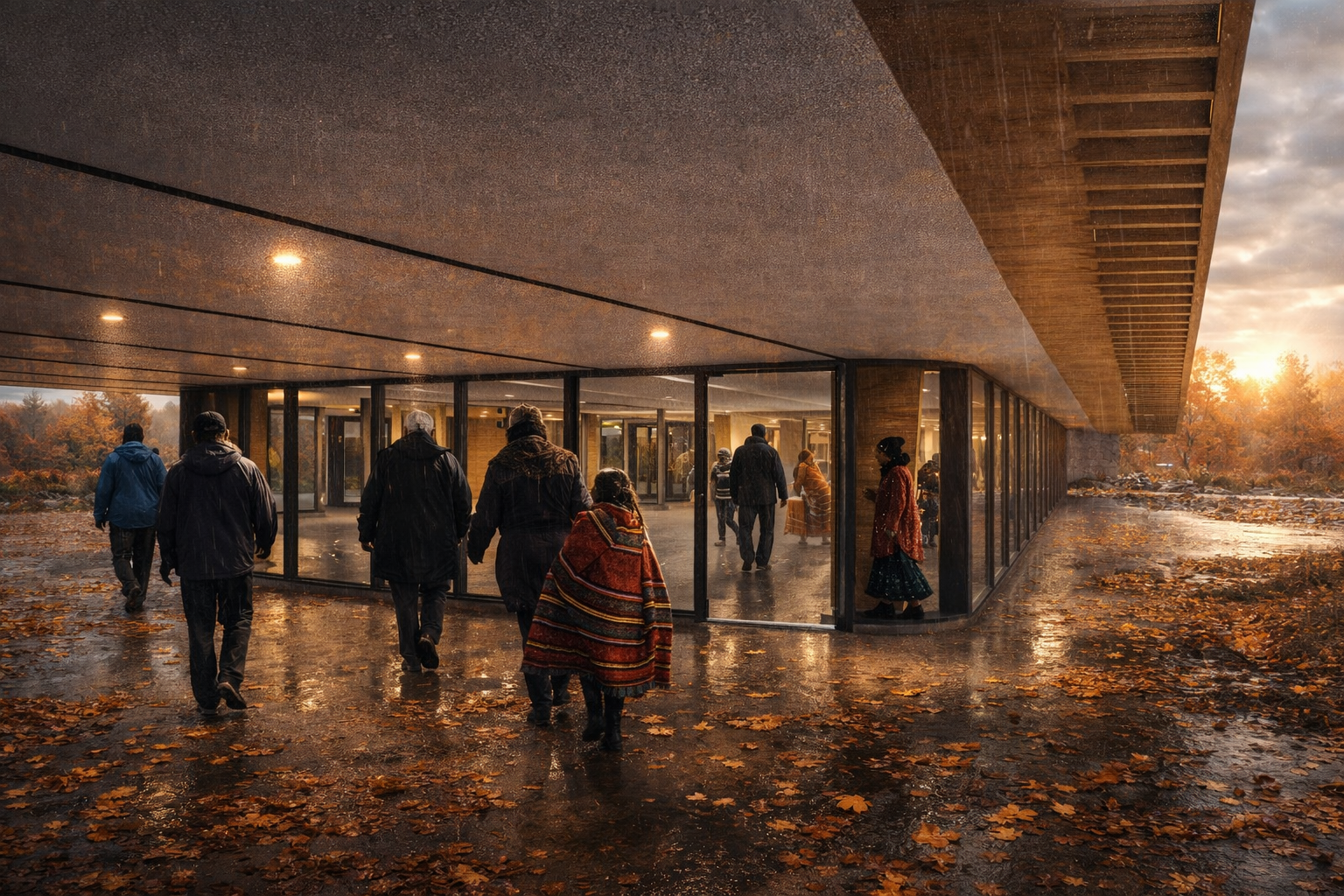
This project proposes a Gathering and Resiliency Centre for the MoCreebec Eeyoud community in Moose Factory, Ontario, developed through a design process grounded in listening, respect, and cultural responsibility. The work acknowledges that present-day settlements in the Far North do not always reflect the original spiritual and geographic origins of Indigenous communities, and that architecture must respond to both displacement and continuity. Design decisions were informed by Indigenous planning principles, seasonal cycles, and the community’s Comprehensive Community Plan, emphasizing food security, wellness, and social gathering. The building is conceived as a low, resilient form integrated into the landscape, shaped to shelter communal life while responding to climate, snow, and limited daylight. Programmatic elements such as shared kitchens, gathering halls, greenhouses, and elder-focused spaces reinforce intergenerational exchange and self-sufficiency.
Form inspiration draws from cultural artifacts and craft traditions, translating them into a contemporary architectural language rather than literal symbolism. Passive environmental strategies, including solar orientation, geothermal systems, and controlled daylight, support long-term sustainability and operational resilience. The project prioritizes adaptability, allowing for phased growth as community needs evolve. Architecture here is understood not as an object, but as a framework for care, healing, and continuity. The proposal ultimately positions design as a tool for empowerment, reinforcing cultural identity while supporting future resilience.

-
Location: Moose Factory, Moosonee, Ontario, Canada
-
Community: MoCreebec Eeyoud Nation
-
Project type: Indigenous community infrastructure / cultural and resiliency centre
-
Program: Community gathering spaces, elder wellness areas, communal kitchen and dining, greenhouse, makers’ spaces, childcare support
-
Role: Architectural designer; design research and systems integration
-
Scope: Community-informed research, site and climate analysis, architectural concept design, environmental systems strategy, expansion planning
-
Status: Unbuilt (project proposal and design research)
-
Why it mattered: The project demonstrates how architecture can respectfully support Indigenous self-determination by aligning spatial design with cultural values, environmental realities, and long-term community resilience